Boosting AndroidTV Sign-Ups by 2%
A case study on redesigning the ExpressVPN sign-up experience to reduce user friction and drive business growth.
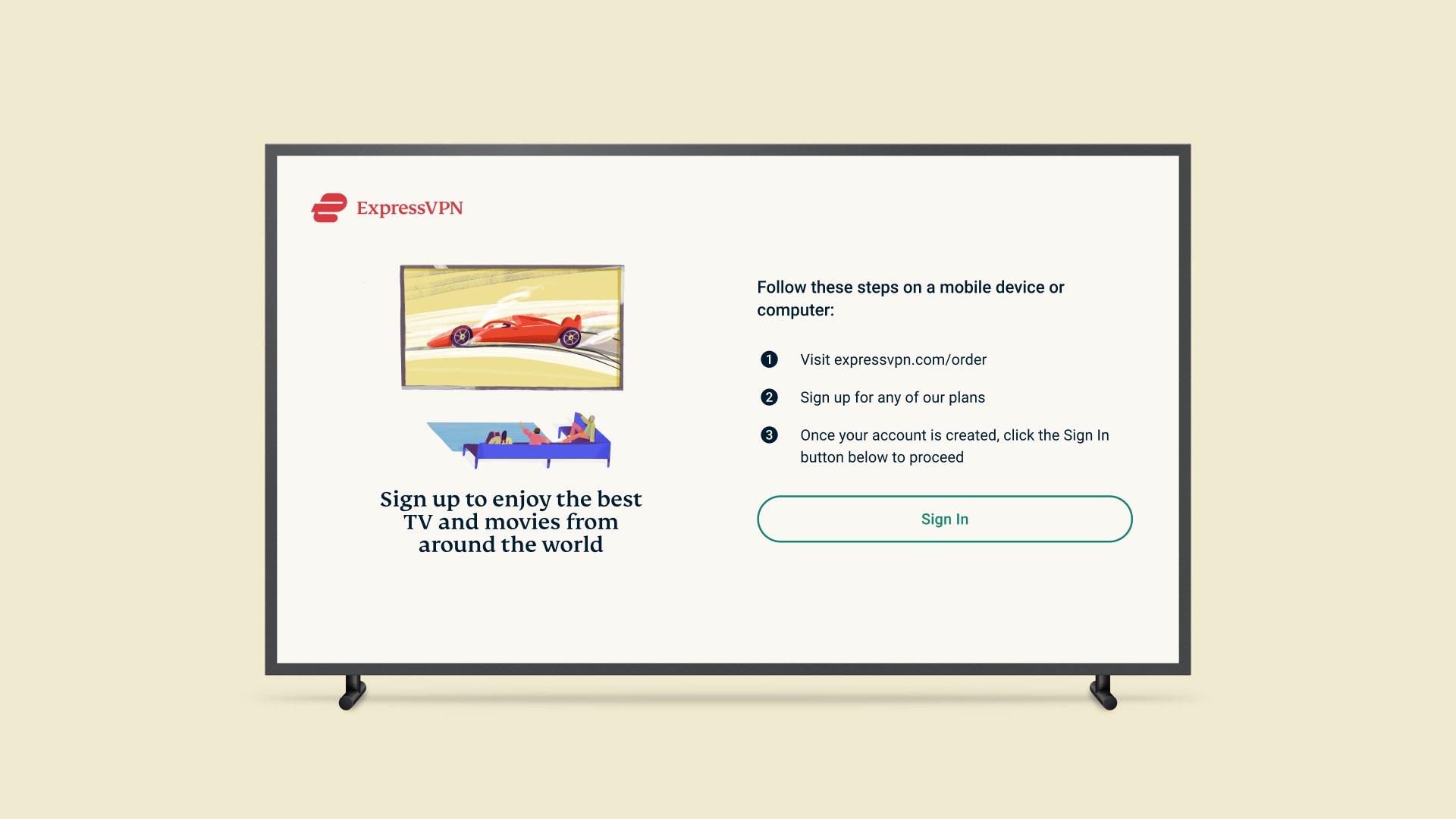
I redesigned the sign-up screen and saw a 2% increase in successful sign-ins, contributing to an estimated annual revenue gain of approximately USD 20,000.
Senior Product Designer
2022
Privacy & Security
Challenge
The cumbersome sign-up process on AndroidTV was causing significant user drop-off and direct revenue loss. With no clear guidance and a clunky activation flow, the platform had a poor conversion rate, creating a major bottleneck for user acquisition on a key growth platform.
Role
As the Lead Product Designer, I drove the end-to-end redesign of the sign-up and onboarding experience. I led research, defined the design strategy, and collaborated across product, engineering, and QA to deliver a solution that aligned user needs with business goals.
Impact
Our work transformed a major point of friction into a seamless onboarding experience, delivering measurable results.
Reduced user friction and related support tickets, leading to higher user satisfaction and lower operational costs.
Established a new design standard for onboarding across all TV platforms at ExpressVPN.
Successfully championed a neglected platform, securing organisational buy-in and placing AndroidTV back on the product roadmap.
+2%
Increase in successful sign-ins
USD 20K
Annual revenue uplift
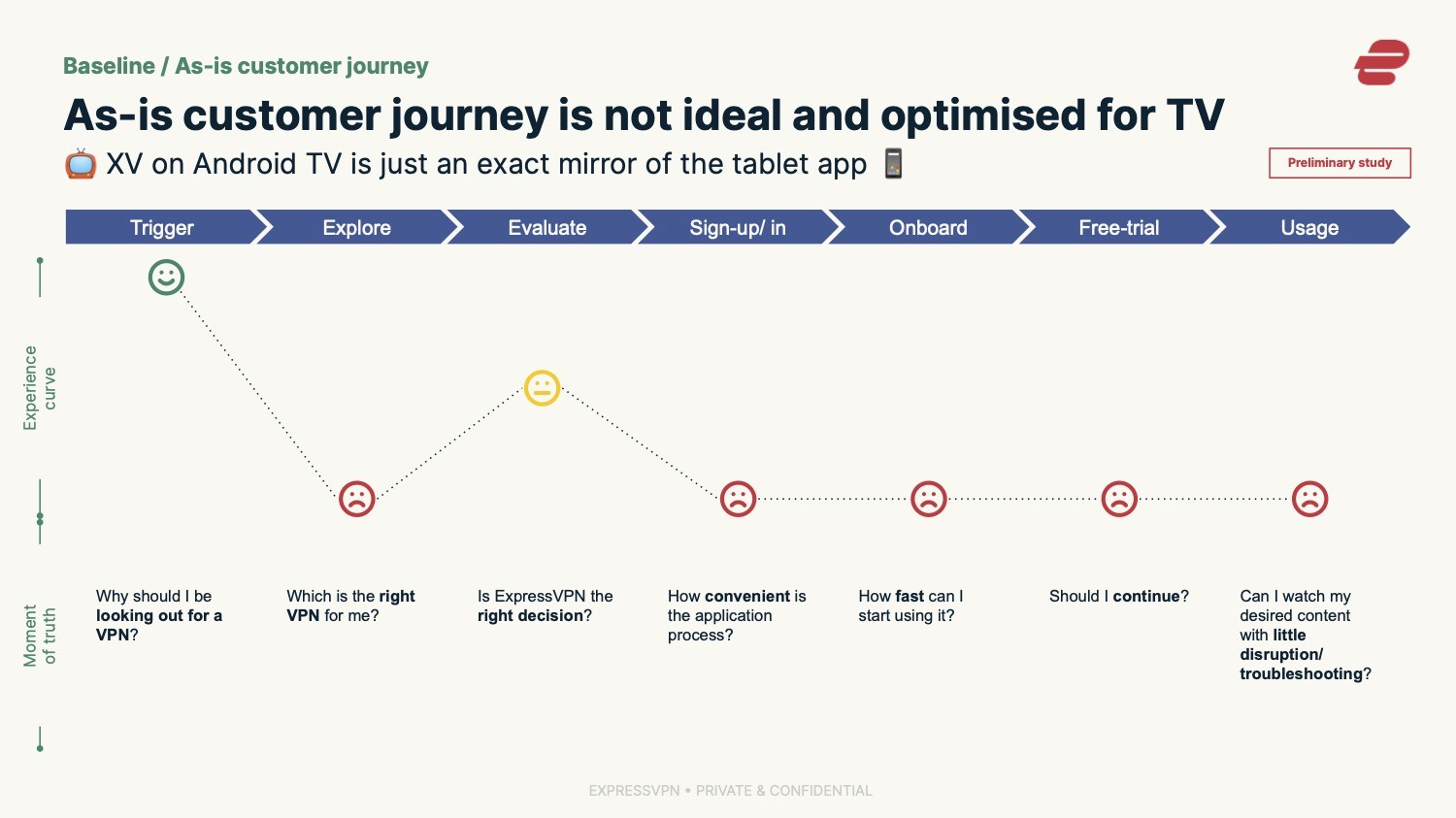
As-is AndroidTV user journey.
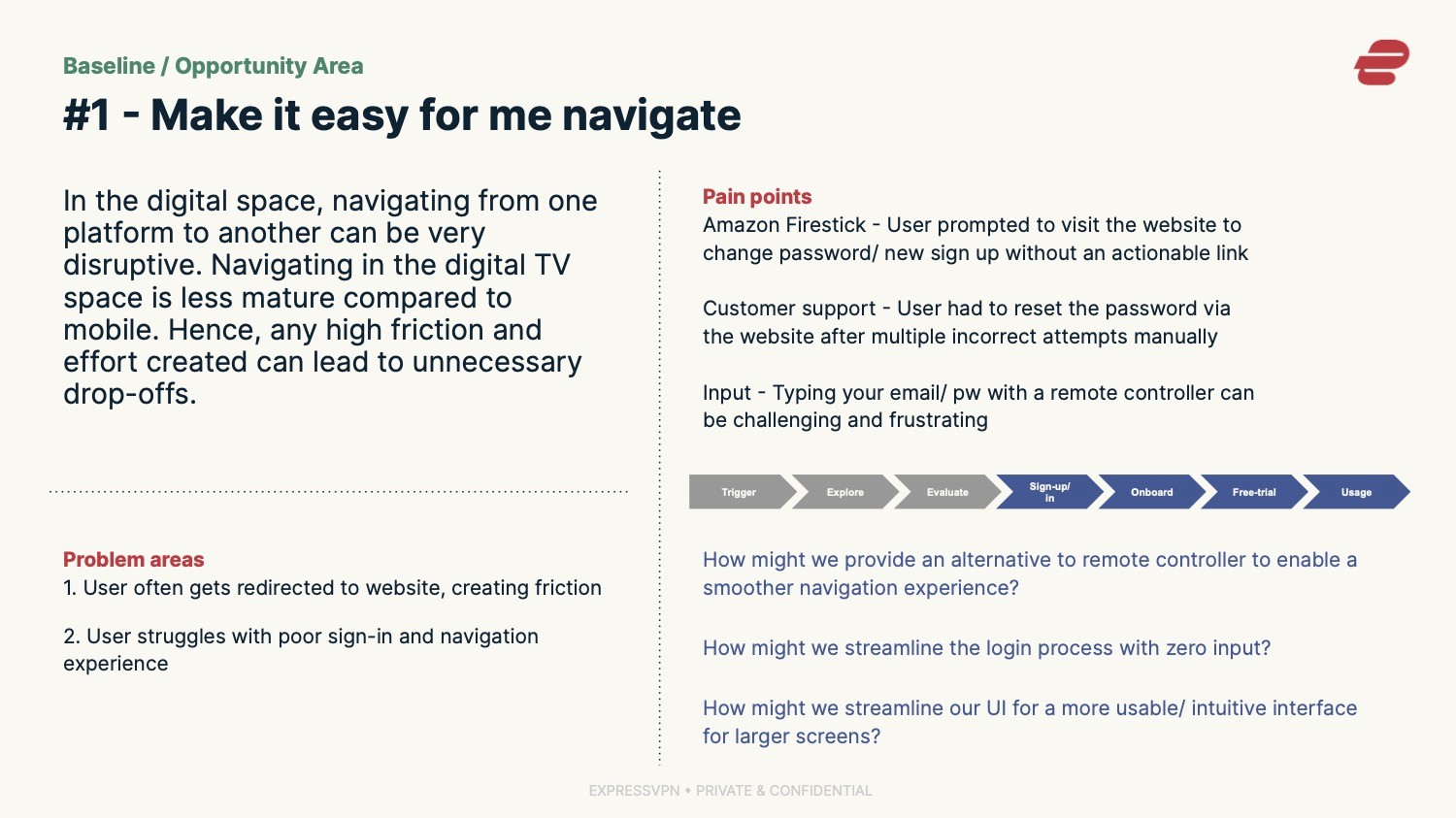
One of the opportunity areas.
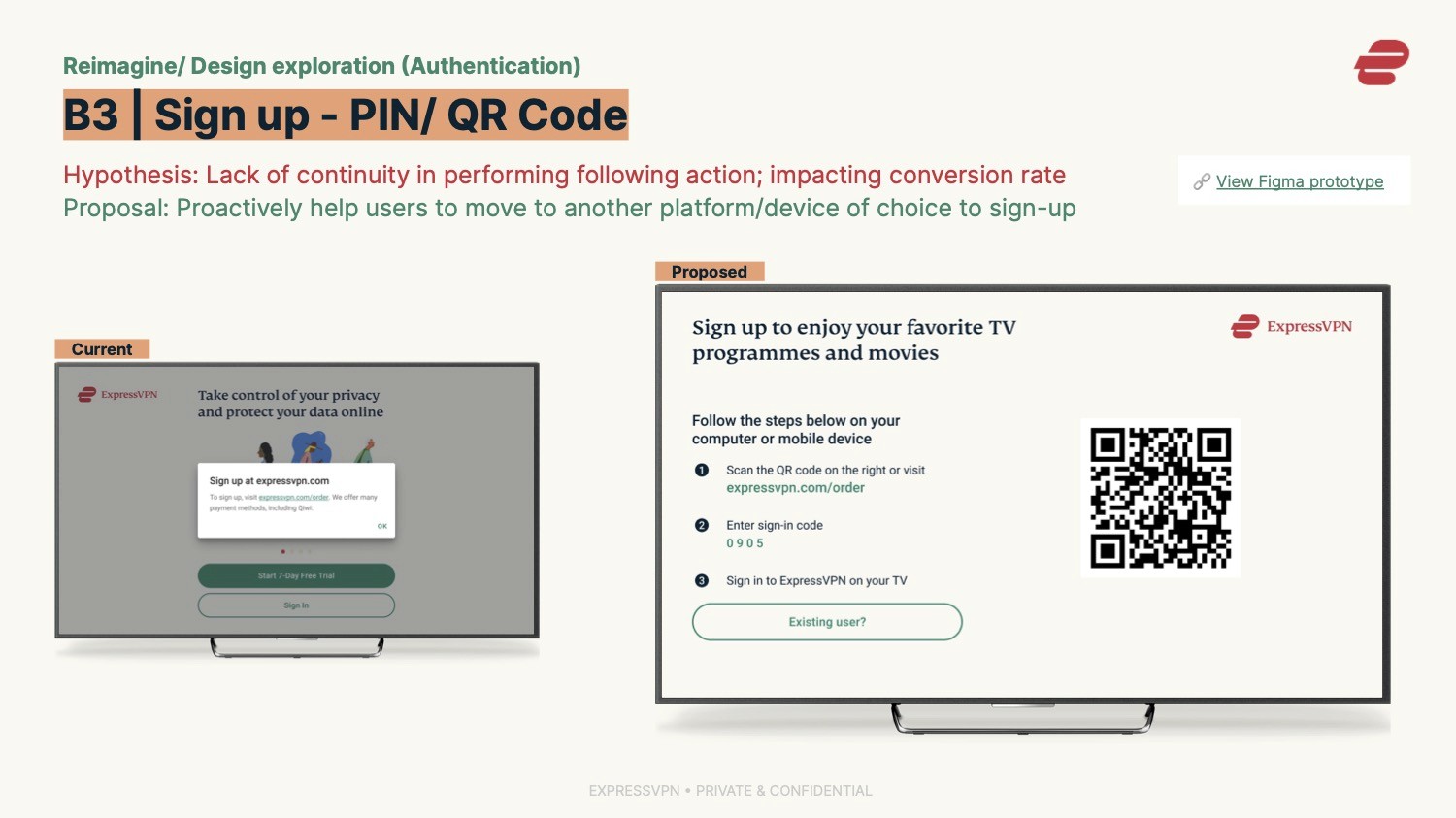
Example of a Northstar design direction.
Behind Closed Doors: Navigating Constraints & Driving Change
The AndroidTV platform was a significant source of user frustration, but had no dedicated owner and hadn't been prioritised since 2018. Key stakeholders, while supportive, were hesitant to adopt new work that fell outside their planned OKRs, creating organisational inertia.
What I did to drive change:
Built a Coalition for Change - Recognising the lack of formal ownership, I took the initiative to build a case for improvement. I partnered with the Customer Support and Voice of the Customer (VotC) teams to gather qualitative data and validate user frustrations.
Quantified the Problem - I worked "offline" with a product manager to analyse the user funnel, identifying specific drop-off points and quantifying the business impact of the poor user experience.
Made it Easy to Say Yes - Instead of presenting a single, monolithic solution, I provided multiple design iterations with clear pros and cons. This empowered stakeholders by simplifying the decision-making process and allowing for a phased approach.
Socialised the Vision - I distilled all key findings, data, and design recommendations into a single, compelling presentation. This shareable deck made the problem and potential solutions clear, making it easy to socialise the initiative and build widespread support for actionable next steps.
This proactive, data-driven approach successfully broke the deadlock. By aligning disparate teams around a clear, quantified problem and providing feasible solutions, we secured the buy-in needed to move forward, transforming a neglected platform into a priority.
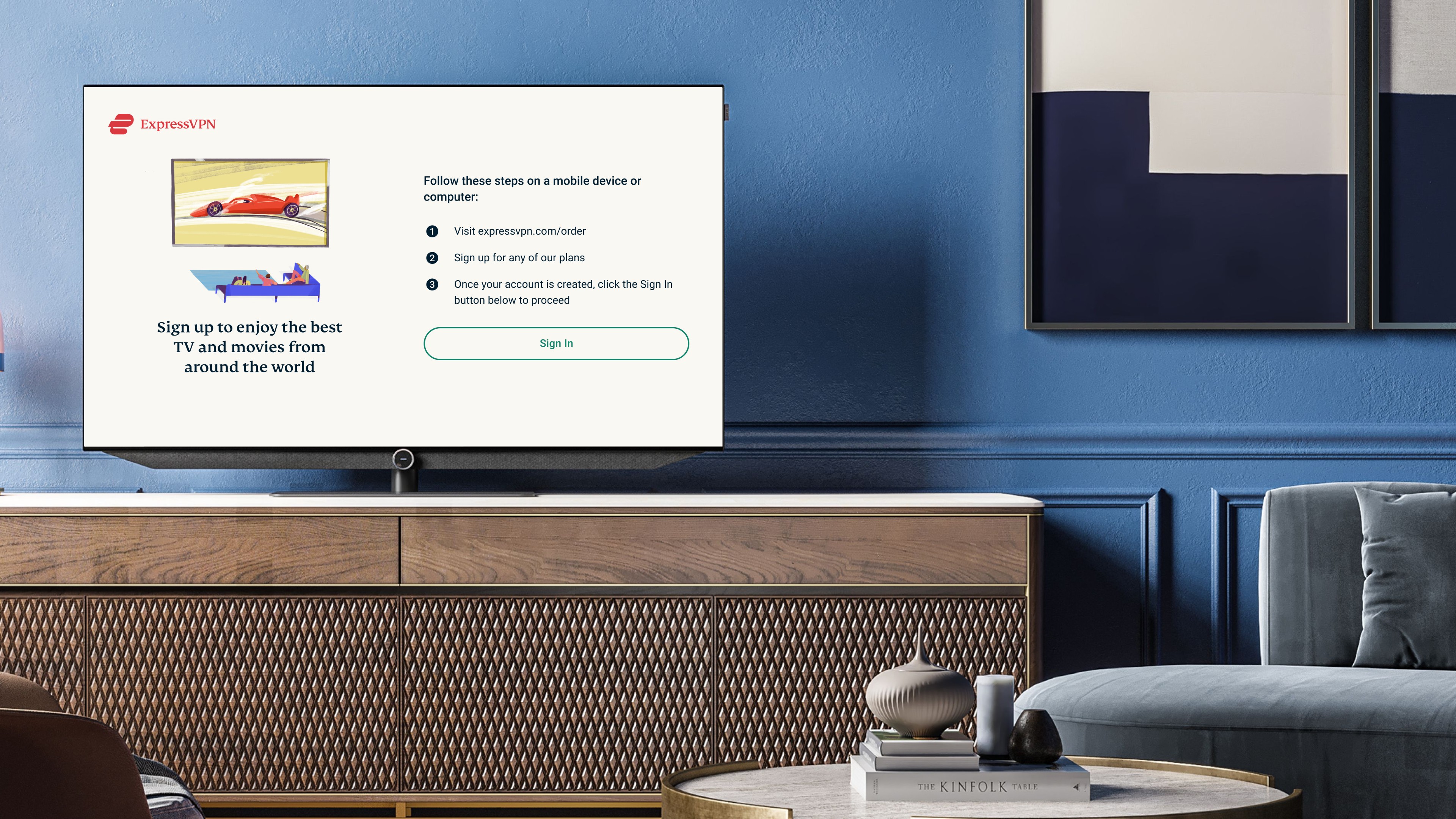
Final implementation.
Learning
Good design is understanding business constraints. In a world where everything is fighting for attention, this case study highlights the importance of pursuing wins that might be small but help pave the way for more significant conversations.
If I could do this again... I would break design directions into size options so stakeholders could compare them and seek clarification quickly, speeding up the decision process.